
Intensive Mixer Specification Selection Guide 2026: Choose Right for Ceramics & Refractory | SCM Group HK
- SCM

- 5 minutes ago
- 2 min read
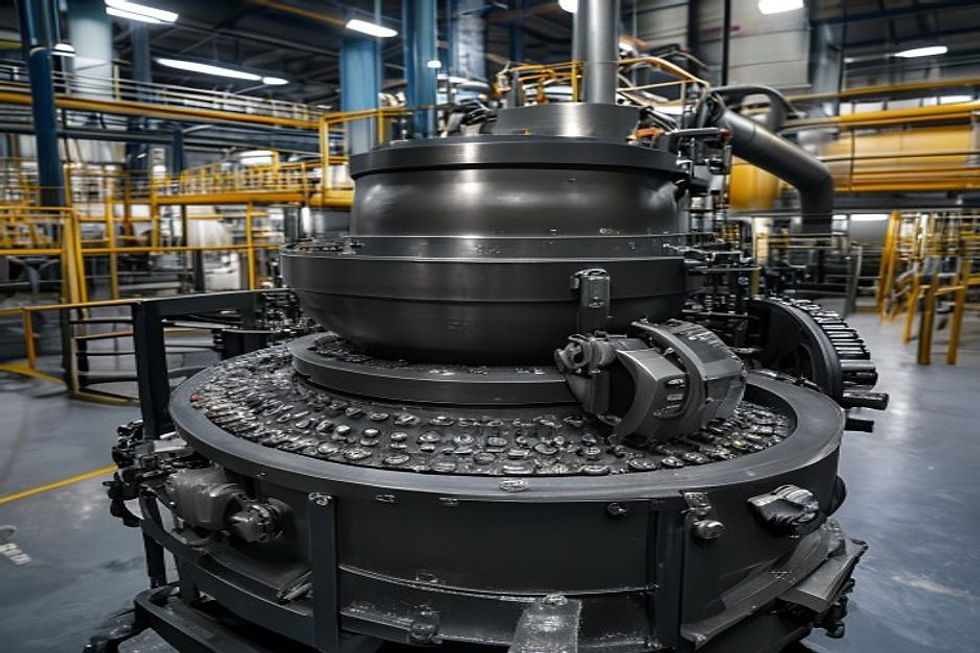
Selecting the right intensive mixer for ceramic, refractory, or battery material granulation is one of the most critical engineering decisions in 2026. The global intensive mixer market has grown significantly, with the ceramics and refractory segments driving demand for high-precision granulation equipment capable of achieving particle sizes between 0.1mm and 5mm with consistency rates above 95%. Industry data shows that companies upgrading from conventional paddle mixers to intensive granulation mixers report 30–45% improvements in product density and a 20–35% reduction in scrap rates. The selection process must account for three primary variables: material hardness (Mohs scale), required throughput (ranging from laboratory-scale 5L batches to industrial 2,000L continuous systems), and binder compatibility. SCM Group HK has sourced and supplied intensive granulation mixers to ceramic manufacturers, refractory producers, and new energy battery material processors across Southeast Asia, the Middle East, and Europe, making specification matching a core competency of our supply chain service.

Key Technical Parameters to Evaluate
When specifying an intensive mixer for granulation, buyers must evaluate pan volume, rotor speed range (typically 100–1,500 RPM for intensive mixers), motor power (kW per cubic meter), liner material (manganese steel vs. polyurethane vs. alumina ceramic), and discharge system type. For battery cathode and anode material mixing, contamination control is paramount—requiring stainless steel 316L liners with explosion-proof rated motors. Refractory applications typically demand pan volumes between 150L and 500L with dual-rotor configurations for uniform aggregate distribution. Ceramic powder granulation benefits from variable-frequency drive (VFD) control, allowing precise rotor speed adjustment to match moisture content and binder viscosity at different production stages.
Process Workflow & Cycle Time Optimization
The granulation process in an intensive mixer follows a defined sequence: dry mixing (2–4 minutes), binder addition and wet granulation (3–8 minutes), granule growth and compaction (1–3 minutes), and discharge. Total cycle times range from 6 to 15 minutes depending on material type and target particle size distribution. Optimizing cycle time without compromising granule quality requires precise control of rotor tip speed and pan rotation speed ratio—typically maintained at a 10:1 ratio. For ceramic tile production, an intensive mixer with 250L capacity running at 85% utilization can process 12–18 batches per 8-hour shift, yielding 2,550–3,825 kg of granulated ceramic powder per shift.

SCM Group's Sourcing & Supply Chain Advantage
SCM Group HK specializes in sourcing intensive granulation mixers from certified Chinese manufacturers with ISO 9001 and CE certifications, offering OEM customization for liner materials, motor specifications, and automation integration. Our Shenzhen operations manage factory quality inspection, export documentation, and customs clearance, ensuring end-to-end supply chain efficiency. Whether you require a single laboratory unit or a full production line of 5–10 industrial mixers, SCM Group provides competitive pricing with lead times of 45–90 days from order confirmation.
Contact SCM Group
Ready to specify the right intensive mixer for your production requirements? Our engineering team is available to review your material specifications and production targets. Contact us at scmgroup@scmgroup.online or reach us via WhatsApp at +86-198-7525-3287.



Comments