
Intensive Mixer Specifications & Process Selection Guide 2026: Maximize Your Production Output | SCM Group HK
- SCM

- 2 days ago
- 3 min read
The global industrial mixing equipment market reached USD 8.2 billion in 2025 and is projected to grow at a CAGR of 6.4% through 2030, driven by expanding demand in battery materials, ceramics, refractory products, and pharmaceutical granulation. In 2026, selecting the right intensive mixer is more critical than ever as processing requirements have become increasingly complex. Intensive mixers—also known as pan mixers or granulating mixers—use high-speed rotary action to achieve thorough homogenization of dry powders, wet granulation, and coating processes in a single operation cycle typically lasting 3–8 minutes. Key performance indicators include batch capacity (ranging from 50 liters for laboratory scale to 3,000 liters for industrial production), tip speed of mixing tools (commonly 8–15 m/s), and ability to handle moisture content from 0.5% to 25%. Whether you are processing lithium battery cathode materials, alumina ceramics, abrasive grains, or specialty refractory compounds, matching mixer specifications to your material characteristics is the single most important factor in achieving consistent product quality and minimal rejection rates. This guide covers the critical specification parameters, process optimization techniques, and purchasing evaluation framework to help engineering and procurement teams make informed decisions in 2026.

Critical Specifications to Evaluate Before Purchasing
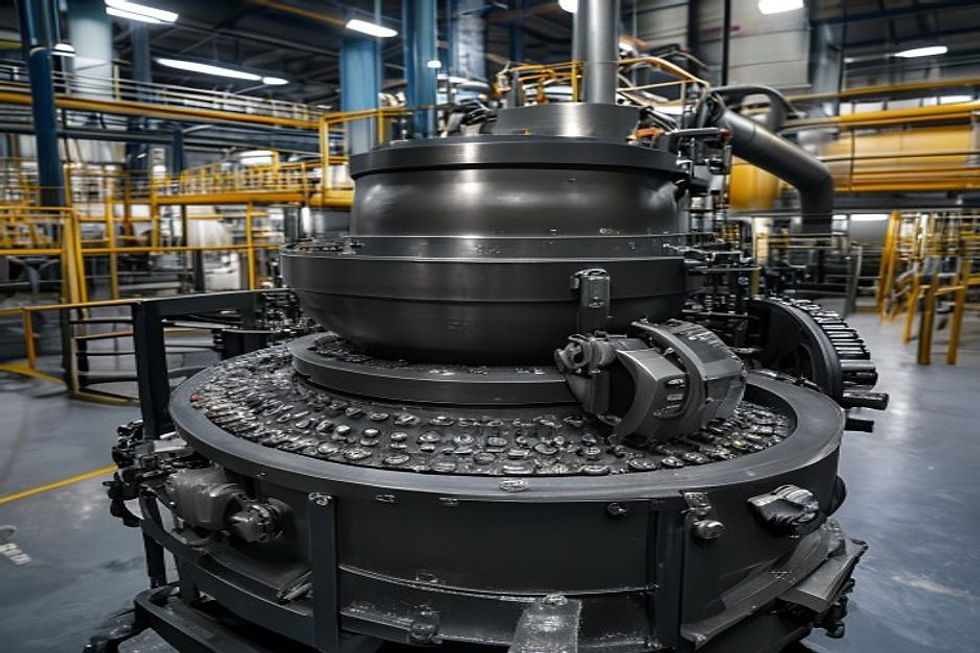
When selecting an intensive granulation mixer, engineers must evaluate five core parameters. First, mixing pan volume determines batch output—industrial facilities typically require 500L to 1500L units to maintain continuous production flow with multiple shifts. Second, the mixing tool geometry (plowshare, star, or paddle configuration) must match the rheology of your material blend to ensure adequate shear without over-mixing. Third, drive motor power (typically 22–200 kW depending on batch size) governs throughput and mixing intensity—undersized motors lead to extended cycle times and uneven mixing. Fourth, chopper speed (1,450–2,900 RPM) controls granule size distribution, with finer particles requiring higher chopper frequencies. Fifth, material of construction—stainless steel 304, 316L, or abrasion-resistant alloy lining—must be selected based on the abrasiveness of your raw materials. For battery-grade and pharmaceutical applications, hygienic design with CIP (clean-in-place) capability is increasingly mandated by end-customers and regulatory auditors. SCM Group HK supplies intensive mixers across all standard capacity ranges with documented technical specifications and factory acceptance testing before delivery.
Process Optimization for Key Application Industries
Different industries require distinct process approaches when using intensive mixers. For lithium iron phosphate (LFP) battery cathode granulation, the critical challenge is achieving uniform carbon black coating on active material particles without over-shearing. Typical batch time is 5–7 minutes at 800–1,200 RPM tool speed. For dense refractory brick production, bonding agent distribution must reach 99% homogeneity within 4 minutes to ensure sintered density above 3.2 g/cm³. Ceramic tile and sanitary ware manufacturers use intensive mixers to pre-granulate spray-dryer feed, targeting moisture content of 5–8% and particle size D50 of 150–300 microns. For abrasive grain (corundum, silicon carbide) bonded wheel manufacturing, binder coating uniformity directly determines wheel burst strength—deviations above ±5% lead to quality rejection. SCM Group HK's technical team provides application-specific parameter documentation and on-site commissioning support upon request.

Supplier Evaluation Framework and Documentation Checklist
Before committing to a supplier, buyers should request: (1) detailed technical datasheet with motor power curve and mixing tool geometry drawings; (2) material certification for all product-contact parts; (3) factory test reports showing achieved granule size distribution on representative material; (4) reference list of installations in your industry sector; (5) spare parts availability and lead time commitments. Quality suppliers provide all of the above without hesitation. For overseas procurement, additional verification should include export inspection certificates, customs HS codes (typically HS 8474.20 for mixing machinery), and country-of-origin documentation for trade compliance. SCM Group HK facilitates complete documentation support for international buyers, including CE compliance for European markets and export customs clearance from Shenzhen.
Contact SCM Group HK
Ready to request specifications or discuss your intensive mixer requirements? Our technical team in Hong Kong and Shenzhen is available to review your application parameters and recommend the optimal configuration. We supply intensive mixers for battery, ceramics, refractory, and abrasives industries with rapid quotation turnaround and full export documentation. Contact us today: Email: scmgroup@scmgroup.online | WhatsApp: +86-198-7525-3287


Comments