
Intensive Mixer Granulation 2026: How to Select the Right Specifications for Your Process | SCM Group HK
- SCM

- 12 hours ago
- 2 min read
The industrial intensive mixer market is experiencing significant growth in 2026, driven by surging demand from battery materials, ceramics, refractory, and advanced materials sectors. Modern intensive mixers—ranging from 1-liter laboratory units to 7,000-liter production systems—offer precision granulation capabilities that traditional paddle mixers cannot match. The global granulation equipment market is projected to grow at a CAGR of 6.8% through 2028, with China-based OEM manufacturers supplying over 60% of export volume. Selecting the right intensive mixer specification requires careful evaluation of material density, required granule size distribution, batch volume, and throughput requirements. Key performance parameters include rotor tip speed (typically 8–15 m/s), mixing intensity (W/kg), cycle time per batch, and critical moisture content range for optimal granulation. For battery electrode materials such as LFP and NCM, uniform mixing to sub-micron level is essential, while refractory and ceramic applications demand high-shear consistency across large batch volumes of 500–6,000 liters.
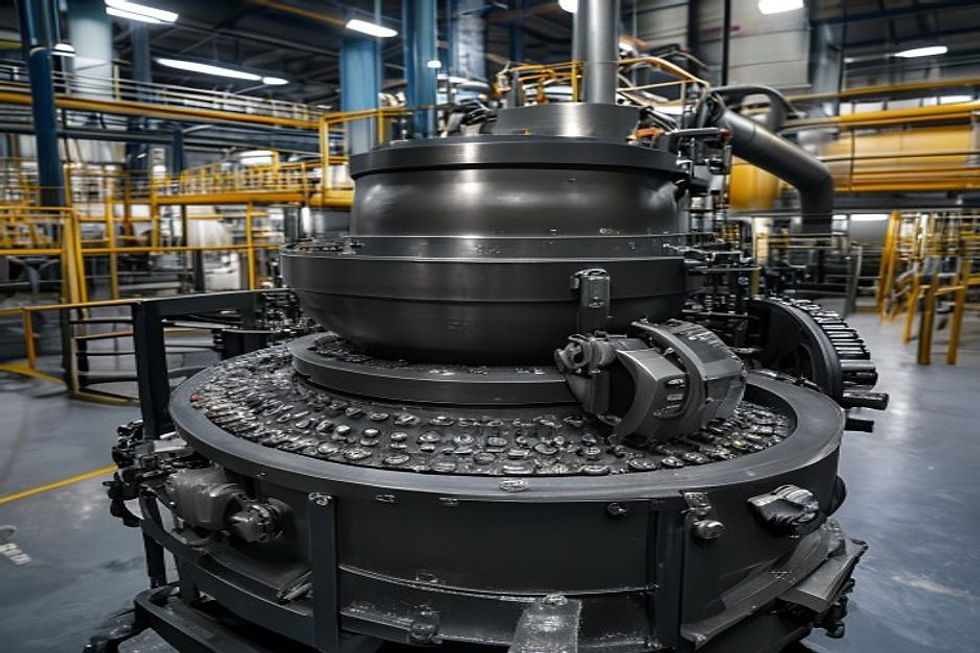
Understanding Mixer Types and Capacity Ranges
Intensive mixers come in several configurations suited to different applications. The Type R series—the most common in industrial ceramic and refractory production—features a rotating pan with a fixed high-speed mixing tool and adjustable cutter. Capacities range from 5–75 liters (laboratory scale) to 100–6,000 liters (production scale), with 500L and 1,000L units being the most popular for medium-volume ceramic producers. For new energy battery applications, smaller 100–300L units are preferred due to strict batch control requirements. SCM Group sources intensive mixers for battery material clients requiring less than ±2% weight uniformity across batches, and for refractory clients needing 99.5% homogeneity across alumina-silica mixes.
Critical Specifications: Battery Materials vs. Ceramics
The specification matrix differs significantly between battery and ceramic applications. For battery electrode granulation (LFP, NCM, graphite, Si-C), critical specs include: mixing rotor speed 800–1,500 RPM, tip speed 10–15 m/s, jacket cooling capacity to control exothermic reactions, and a gas-tight or inert-atmosphere option for lithium-sensitive materials. For ceramic and refractory granulation, priority shifts to wear-resistance of mixing tools (Ni-hard or ceramic-coated), dust suppression systems, and the ability to handle materials with bulk densities from 0.8–3.2 g/cm³. Both application types benefit from variable-speed drives for precise control of mixing energy input per kilogram of material processed.

Process Optimization and ROI Considerations
Optimizing your intensive mixer process in 2026 focuses on three levers: cycle time reduction, energy efficiency, and consistent granule quality. Advanced rotor geometries now achieve 15–20% shorter cycle times versus 2020-era designs. Variable frequency drives reduce idle energy consumption by up to 30%. For a typical 1,000L production unit running 3 shifts per day, these improvements translate to 2–4 additional batches per day—representing a 10–15% throughput gain without capital investment. SCM Group evaluates total cost of ownership (TCO) over 5–10 year horizons for clients, factoring in wear parts replacement (mixing tools, liner plates), maintenance downtime, and energy costs across China and Hong Kong sourcing scenarios.
Contact SCM Group
SCM Group HK offers comprehensive sourcing and technical consultation for industrial intensive mixers and granulation systems. Whether you require laboratory-scale R&D equipment or high-volume production systems for battery materials, ceramics, or refractories, our team provides OEM sourcing, quality inspection, and FOB/CIF export coordination from China. Contact us today to discuss your specifications. Email: scmgroup@scmgroup.online | WhatsApp: +86-198-7525-3287


Comments