
Granulation Mixer Selection Guide 2026: Specifications & Process for Refractory and Ceramic Industries | SCM Group HK
- SCM

- 2 days ago
- 2 min read
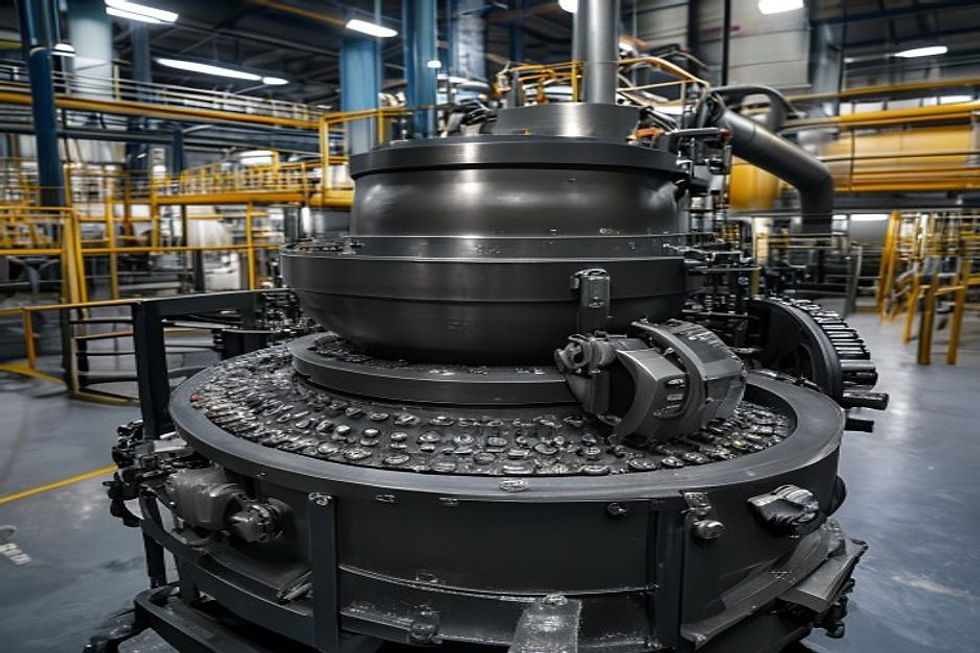
The intensive granulation mixer has become the cornerstone of modern industrial processing across refractory, ceramic, and battery material manufacturing. In 2026, global demand for high-efficiency granulation equipment continues to surge—driven by the rapid growth of lithium-ion battery production projected to reach 4.7 TWh annual capacity, alongside expanding ceramic and refractory markets. Selecting the right intensive granulation mixer requires a deep understanding of process requirements, material properties, and technical specifications. Key parameters include mixing chamber volume (ranging from 2L lab units to 5,000L industrial models), rotor tip speed (typically 8–15 m/s for wet granulation), impeller type (planetary vs. high-shear), and drive power (from 7.5 kW to over 200 kW). Unlike conventional paddle or ribbon mixers, the intensive granulation mixer combines simultaneous high-speed mixing and granulation in a single unit, reducing process time by up to 60% while achieving superior homogeneity with CV values below 2%. For procurement teams evaluating equipment in 2026, understanding these core parameters is the foundation of a sound specification.

Key Specification Parameters by Application
Different industries demand different granulation specifications. For refractory materials—magnesia, alumina, silicon carbide—you need a mixer with a robust steel liner (50–80mm thick wear-resistant steel) capable of handling abrasive loads above 2.0 g/cm³ bulk density. For ceramic granulation, the priority shifts to precise moisture control (typically maintaining 6–12% moisture content) and achieving consistent spherical granule sizes between 0.5–3mm. Battery material manufacturers require clean-room compatible designs with full stainless steel contact parts and inert gas purging capability. Always verify the rotor-to-pan clearance specification (ideal range: 1–3mm) and the rated batch weight versus volumetric capacity ratio before specifying equipment. Rotor tip speed, binder injection system design, and liner material selection are the three variables that most significantly affect granule quality output.
Process Workflow and Operating Best Practices
Optimal operation of an intensive granulation mixer follows a defined sequence: dry blending phase (2–5 minutes at high speed), liquid binder addition phase (atomized spray for uniform distribution), and granulation consolidation phase (speed reduction to 60–70% for pellet formation). Temperature monitoring is critical—maintain pan temperature below 45°C for most applications to prevent premature drying. For high-tonnage operations, automated moisture sensors integrated with PLC control systems enable real-time process adjustment, reducing batch-to-batch variance by up to 35%. Document your process parameters at commissioning stage and establish SOP-controlled operating ranges to maintain consistent granule quality across production shifts.

Quality Control and Acceptance Testing Standards
Before finalizing equipment selection, request factory acceptance test (FAT) data including granule size distribution (GSD) curves, bulk density measurements, and homogeneity index reports. Certified intensive granulation mixers for battery materials should comply with IEC 62133 safety standards, while those for refractory production often require ISO 9001:2015 certification from the manufacturer. Conduct a witnessed FAT with your own raw materials where possible—process results with standard test materials may not accurately predict performance with your specific formulations. For critical applications, request a minimum 10-batch validation run with documented statistical process control (SPC) data before accepting the equipment.
Contact SCM Group
For technical consultation on intensive granulation mixer specifications, application engineering support, or competitive quotations, contact SCM Group HK directly. Our industrial equipment specialists provide equipment sizing, process validation guidance, and project timeline planning for refractory, ceramic, and new energy material applications. Email: scmgroup@scmgroup.online | WhatsApp: +86-198-7525-3287



Comments