
Eyewear Frames Quality Verification & MOQ Guide 2026: Acetate, Titanium & TR90 OEM Standards | SCM Group HK
- SCM

- 3 days ago
- 3 min read
For international buyers sourcing custom eyewear frames from China in 2026, understanding quality verification protocols and MOQ (Minimum Order Quantity) structures is essential to de-risk procurement and ensure compliance with destination market standards. China accounts for approximately 70% of global eyewear production by volume, with Wenzhou and Shenzhen serving as the primary manufacturing hubs for acetate, titanium, and TR90 frames. The 2026 market is experiencing strong growth in eco-friendly and lightweight premium frames, with consumer surveys indicating that 68% of buyers prioritize material quality and durability over price. However, not all Chinese manufacturers operate to the same quality standard — the gap between top-tier OEM suppliers and low-cost commodity factories can be substantial. Quality verification must cover material certification, dimensional tolerance, coating durability, and international compliance. MOQ structures vary significantly: standard acetate or metal frame MOQs run 300 pieces per model in 3 colorways, while some specialized manufacturers offer flexible runs from as low as 20–50 pieces for custom designs. Understanding these parameters upfront prevents costly surprises after production begins.

Quality Verification Standards for 2026
Eyewear frames destined for EU markets must comply with EN ISO 12870:2016 (requirements for spectacle frames), while US-bound products require conformance with ANSI Z80.5 (requirements for frames). Quality testing protocols for a credible Chinese OEM supplier should include: sweat corrosion resistance testing (48–72 hours at 40°C in artificial sweat solution per ISO 12870 Annex B), thermal stability testing (-20°C to +80°C cycling, 5 cycles), UV resistance verification for acetate frames (100 hours xenon arc lamp exposure with ΔE color change ≤3), hinge durability testing (6,000 open/close cycles minimum), and coating adhesion testing using cross-cut tape test (minimum 4B rating per ASTM D3359). For titanium frames, nickel release testing (EN 1811) is mandatory for EU compliance — nickel release must not exceed 0.5 μg/cm²/week. TR90 (polyamide) frames should be validated for chemical resistance to common skincare ingredients including sunscreen and cosmetics.
MOQ Structures & Lead Times by Material
MOQ and lead times in 2026 vary significantly by material and production complexity. Acetate frames (Mazzucchelli or Domilens sheet material) typically carry a 300-piece MOQ per model/color, with production lead time of 45–60 working days from design sign-off and sample approval. Custom acetate patterns (laminate or hand-polished) require an additional 15–20 working days. Titanium frames carry an MOQ of 200–300 pieces per model, with lead times of 75–90 working days due to the precision CNC machining and multi-stage electroplating process. TR90/Ultem injection-molded frames have higher upfront tooling costs (USD 2,000–5,000 per mold) but lower per-unit costs at scale; MOQ is typically 500–1,000 pieces per model with 45-day lead times once tooling is complete. For private-label programs requiring logo engraving, temple printing, or custom case sets, add 10–15 working days. Buyers targeting the 2026 Q4 holiday season should place OEM orders by early August at the latest.
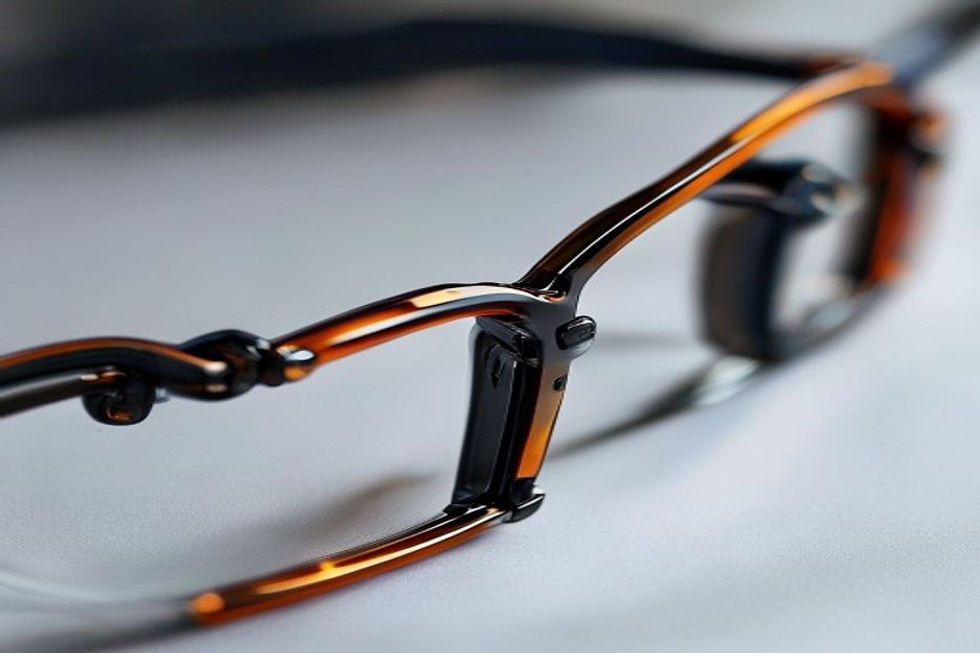
Pre-Shipment Inspection & Compliance Documentation
Before accepting shipment of custom eyewear frames, buyers should conduct or commission a pre-shipment inspection (PSI) covering: AQL 2.5 visual sampling for surface defects (scratches, bubbles, color inconsistencies), dimensional verification against approved samples (tolerance ±0.3mm for bridge and temple measurements), hinge torque testing (target 0.4–0.8 Nm for spring hinges), lens insert fit verification, and marking compliance (CE mark, frame size, bridge, and temple length engraving). Required compliance documentation for EU import includes a Declaration of Conformity (DoC) per EN ISO 12870, a technical file, and test reports from an accredited laboratory. For the US market, FDA does not regulate spectacle frames as medical devices, but voluntary ANSI Z80.5 compliance and product liability insurance from the manufacturer are strongly recommended. SCM Group HK manages the entire compliance documentation process for our eyewear clients, including liaison with third-party testing labs (SGS, Intertek, Bureau Veritas).
Contact SCM Group
SCM Group HK provides custom eyewear frame sourcing, OEM production management, quality verification, and compliance documentation services for global optical brands and distributors. Based in Hong Kong and Shenzhen, our team handles everything from initial design development to pre-shipment inspection and export logistics. Contact us to discuss your eyewear sourcing requirements. Email: scmgroup@scmgroup.online | WhatsApp: +86-198-7525-3287


Comments